Why Does My Basement Leak When It Rains?
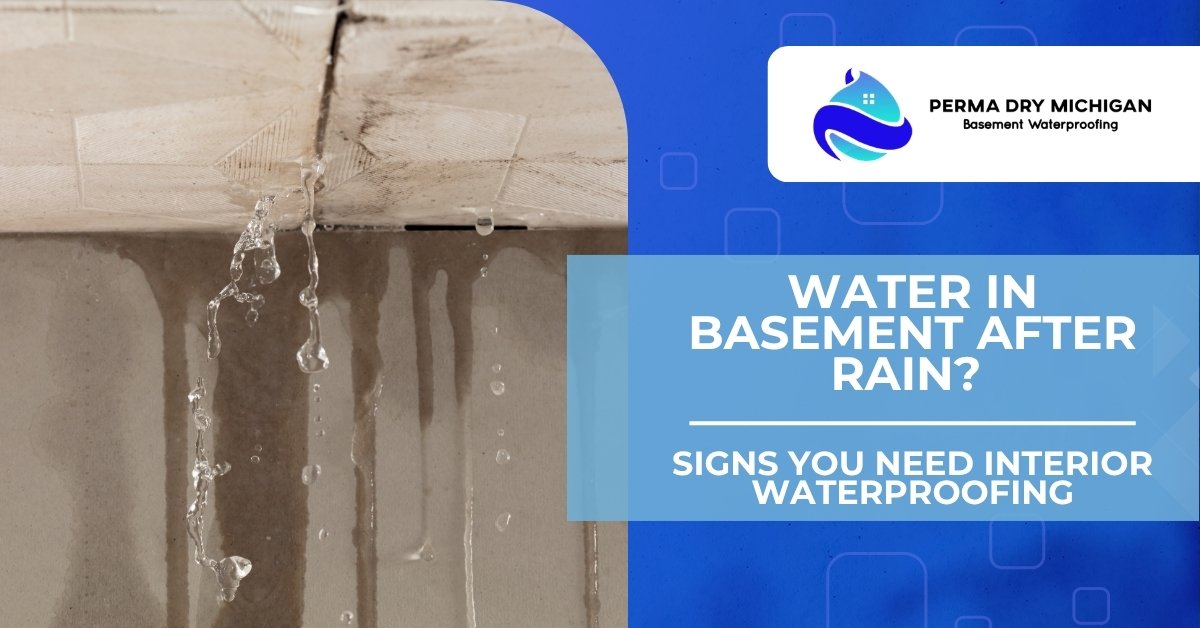
Finding water in your basement after rain usually means hydrostatic pressure is pushing moisture through your foundation. To stop water in your basement when it rains, you need a layered interior basement waterproofing system, including a drain tile and sump pump, to redirect the flow permanently.
Michigan weather throws heavy spring and summer rain at our homes year after year. When those intense storms hit Plymouth, Canton, Livonia, and the rest of Southeast Michigan, many property owners wake up to a flooded lower level. Seeing water seeping, noticing puddles on the floor, or feeling moisture against your basement walls isn’t just a minor inconvenience. It threatens your property value, risks your family’s health, and damages your home’s structural integrity.
We know how frustrating it is to clean up water every time a storm rolls through Detroit or Ypsilanti, especially in communities with older homes. Quick fixes and basic patch jobs won’t solve the underlying problem. You need proven, long-term solutions to keep your home dry and secure. Let’s look at why your basement leaks when it rains, what the warning signs mean, and how a layered interior waterproofing system stops the damage for good.
Understanding Hydrostatic Pressure Against Your Foundation
When heavy rainfall hits Southeast Michigan, it quickly oversaturates the clay-heavy soil around your home. As the ground absorbs this water, it swells and expands. This expansion creates immense hydrostatic pressure against your concrete walls and floors. The heavy, water-logged soil pushes inward, seeking any path of least resistance.
Water leaking into your basement after heavy rain almost always stems from this intense pressure. It forces water against the basement foundation, driving moisture through tiny foundation cracks, porous concrete, and the cove joint where your walls meet the floor. You can’t stop the rain, but you can control where the water goes once it reaches your foundation.
According to the EPA’s mold course guidelines, moisture is the most crucial factor influencing mold growth indoors. Unchecked water intrusion creates the perfect breeding ground for toxic mold in just 24 to 48 hours. The National Institutes of Health also warns that damp indoor environments exacerbate respiratory issues. A wet basement after rain means you have an active moisture problem that demands immediate professional intervention.
Recognizing the Warning Signs of Foundation Leaks
Recurring rain-related seepage is a massive warning sign. Ignoring these early indicators leads to catastrophic foundation failure. If you spot any of the following issues, you need to act fast.
| Symptom | What It Often Means | Recommended Layer of Protection= |
|---|---|---|
| Persistent puddles on the floor | Hydrostatic pressure forcing water through the cove joint | Interior drain tile system |
| Moisture against basement walls | Water seeping through porous concrete | Vapor barrier installation |
| Visible wall or floor gaps | Shifting soil causing structural stress | Professional foundation crack repair |
| Rising water levels during storms | Inadequate or failing water ejection | High-capacity sump pump |
Why Paint and Surface Sealants Fail
Many homeowners try waterproof paints, exterior caulking, or one-part fixes to stop the flow. These surface fixes act like a tiny bandage on a massive wound.
Paint traps moisture inside the concrete, causing the walls to flake and deteriorate faster.
Basic exterior grading helps direct surface runoff, but it can’t counteract the intense hydrostatic pressure building deep underground during a severe Downriver storm. To permanently protect your home, you must relieve the pressure from the inside. We see failed sealant jobs constantly. They waste your money and give you a false sense of security while water continues to erode your foundation behind the paint.
The Layered Protection Approach to Interior Waterproofing
To effectively stop water in your basement when it rains, we rely on a comprehensive, fact-based system. Our certified team at Perma Dry Michigan installs a layered protection approach to interior waterproofing. This system acts as an immediate corrective fix for visible water and a permanent preventative solution.
We install these four crucial layers of defense to guarantee a dry space:
1. Interior Drain Tile Systems
The first line of defense sits beneath your basement floor. We excavate a small trench around the interior perimeter of your foundation to install an interior drain system. This hidden network of pipes collects the excess water pooling around your foundation footing. By giving the water a clear path to flow, the drain tile immediately relieves hydrostatic pressure and keeps your floor completely dry.
2. Vapor Barriers
Moisture easily permeates bare concrete walls, causing high humidity and mold risks. To combat this, we install heavy-duty vapor barriers over the affected walls. This thick, durable liner blocks moisture from entering your living space. Instead of letting water seep into the room, the vapor barrier catches the condensation and directs it straight down into the interior drain tile system.
3. Primary Sump Pumps
All the water collected by the drain tile must exit the house. We install commercial-grade sump pumps engineered to handle Michigan’s heaviest downpours. The drain tile feeds water into the sump pit. Once the water reaches a specific level, the primary pump automatically activates. It efficiently pumps the water out to your yard drainage support system, pushing it far away from your foundation.
4. Backup Sump Pumps
Severe storms often knock out the neighborhood power grid. A primary pump is useless without electricity, and a power outage during a torrential downpour guarantees a flooded basement. We strongly advise a backup sump pump installation for every home. These battery-operated systems automatically kick on when the power goes out or if the primary pump fails. This final layer of protection ensures your system keeps running even when the lights go dark.
Secure Your Property With Perma Dry Michigan Basement Waterproofing
Your home is your biggest investment. Don’t let water in your basement after rain destroy your peace of mind or lower your property value. As a local, family-owned business, we provide honest, transparent pricing and comprehensive solutions tailored specifically to Southeast Michigan’s challenging climate. We back our work with a lifetime warranty to give you absolute confidence in your dry basement.
Ready to protect your home from the next big storm? Visit our basement waterproofing page to learn more about our methods. Then, contact us to get a free estimate and schedule a free, honest consultation to secure your property today.
Frequently Asked Questions About Water in Basement After Rain
The most effective way to stop water is by installing an interior basement waterproofing system. This includes an interior drain tile to relieve hydrostatic pressure and a reliable sump pump to automatically eject the water outside your home.
Heavy rain oversaturates the soil around your foundation. This creates extreme hydrostatic pressure that forces water against your foundation walls, driving moisture through microscopic foundation cracks and the seams where your walls meet the floor.
Interior basement waterproofing is a comprehensive system designed to manage and remove water that enters your basement. It utilizes a layered approach consisting of interior drain tile systems, vapor barriers, and high-capacity sump pumps to catch water and pump it safely away from your home.
Yes, reputable local contractors provide comprehensive lifetime warranties on interior waterproofing systems. This guarantees your basement remains dry and secure, protecting your property investment for the long haul.
Expert Review: This content has been thoroughly reviewed and fact-checked by the certified foundation and basement waterproofing specialists at Perma Dry Michigan. As a fully licensed, certified, and family-owned contractor serving Southeast Michigan, we ensure all technical explanations align with industry best practices and our proven field experience.
Disclaimer: This article is for educational purposes only. Every basement water problem is unique, and underlying foundation issues can vary based on soil type and home construction. We strongly recommend scheduling a professional inspection to determine the exact cause of your leaks and the most effective waterproofing solution for your property.