Wet Basement Worries? Act Before the Ground Freezes
A wet basement is stressful any time of year. Facing it all winter is worse. If you’re stepping around damp spots after every storm, noticing musty odors, or watching seepage return with each heavy rain, you already know the problem won’t fix itself when the temperature drops.
Here’s the timing reality for homeowners in Plymouth, Canton, Livonia, and across Southeast Michigan: Only a few weeks remain for exterior excavation this season. Once the ground freezes, digging becomes slower, more expensive, or impossible until spring. Exterior waterproofing, often called “tar and seal,” depends on digging along your foundation. That means the window to stop water at the source is closing now.
This guide explains why the timing matters, how hydrostatic pressure drives water into your basement, and exactly how Perma Dry Michigan’s tar and seal process stops it. Call (734) 800-1355 or request your free estimate to get on the schedule while exterior work is still possible.
Why Your Window for Exterior Excavation Is Closing
Tar and seal waterproofing starts outside, with crews digging down along your foundation walls. As soil freezes, excavation gets harder, slower, and more disruptive to landscaping and access points around your home. Scheduling also tightens as more homeowners rush to fix leaks before winter.
Waiting carries its own cost. Through the winter, water works into small cracks, joints, and gaps, and repeated freeze-thaw cycles stress those weak points further. Minor seepage you notice today can turn into a persistent leak by spring. If exterior work gets delayed until spring, your basement spends the whole season exposed.
Booking now means your foundation goes into winter protected, not waiting.
Hydrostatic Pressure, Explained in Plain Language
Hydrostatic pressure is the force of water in the soil pushing against your foundation walls. In Southeast Michigan, rain, snowmelt, and seasonal moisture keep the soil around your home saturated, so water stays pressed against the foundation for long stretches.
When that pressure builds, water looks for the easiest way in. It finds cracks, joints, and weak spots in the wall, and that’s when damp walls and wet floors show up inside.
Exterior waterproofing takes on that pressure where it starts, outside the wall. Instead of managing water after it reaches your basement, it keeps water from getting through in the first place.
How the Tar and Seal Process Works
Tar and seal is a complete exterior system. Each step builds on the last to protect your foundation from the outside in. Learn more about our exterior waterproofing (tar and seal) service. Here’s what our crew does:
- Excavate around the foundation, down to the footing, and expose the wall for inspection.
- Inspect the walls for cracks, weak spots, or water damage.
- Seal exterior cracks and make needed repairs.
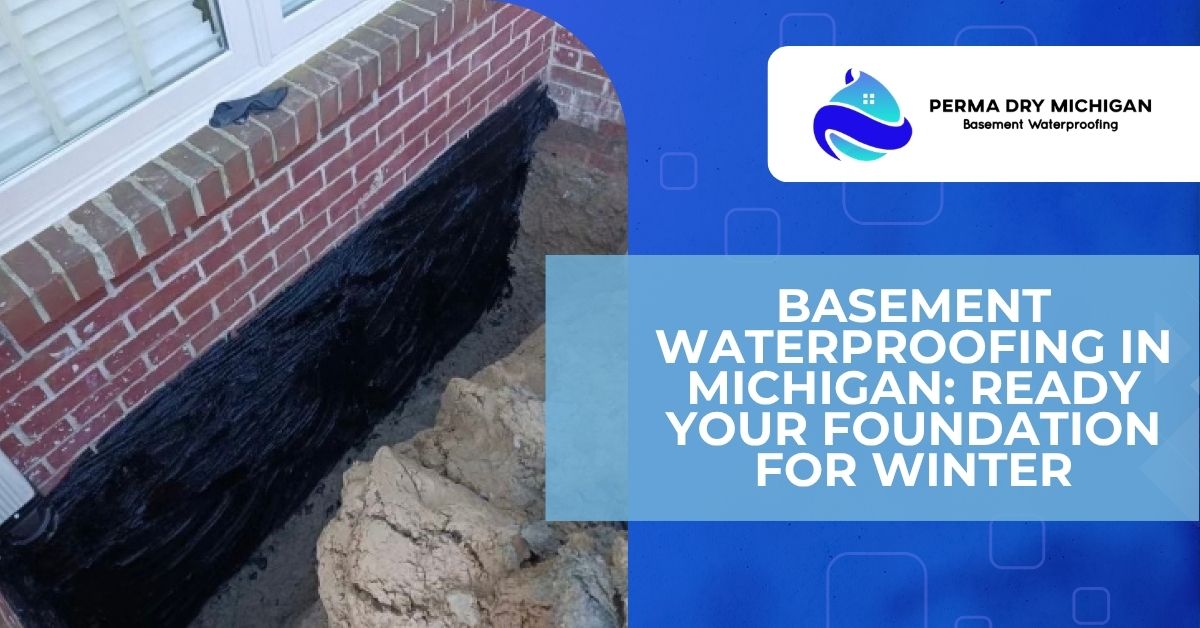
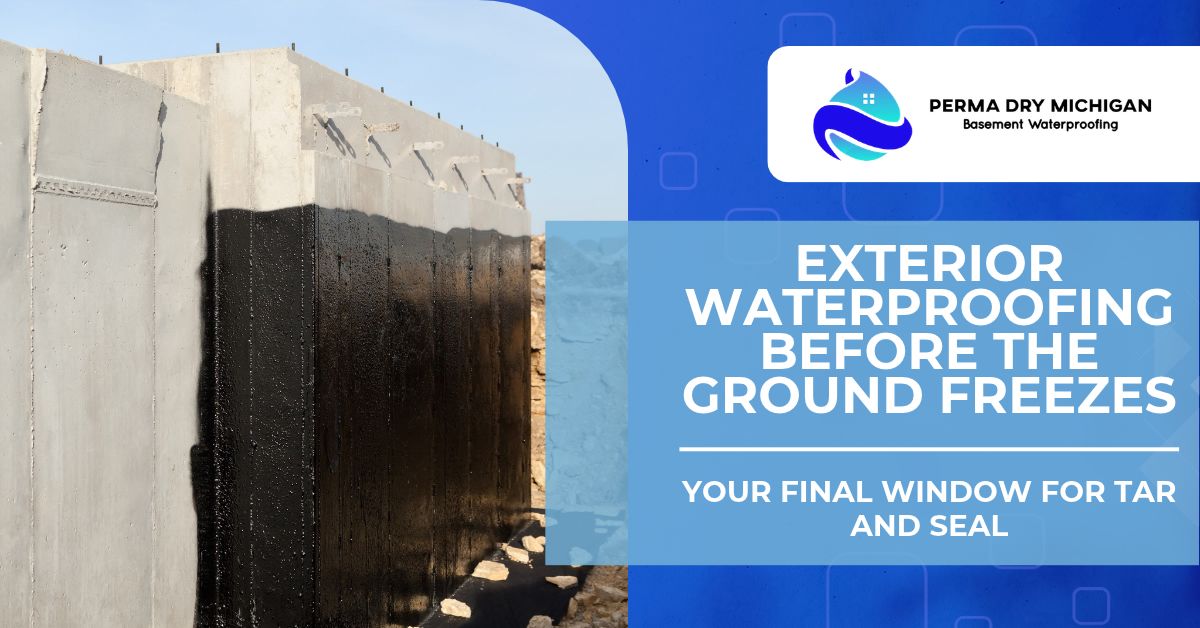
- Apply a layer of tar sealant to the foundation exterior to create a moisture-resistant barrier.
- Install a waterproof membrane over the tar.
- Backfill with gravel or soil for proper drainage and long-term stability.
Why This Approach Stops Water at the Source
Hydrostatic pressure acts on the outside of your foundation, so that’s where tar and seal does its work. Repairing cracks and weak spots removes the entry points. The tar sealant and waterproof membrane form a barrier between saturated soil and your wall, so water meets resistance before it ever reaches your basement. The gravel or soil backfill then helps water drain away from the foundation instead of collecting against it.
The result is a foundation protected from the outside.
Built to Last: Certified Methods and a Lifetime Transferable Warranty
Perma Dry Michigan uses ICC-ES certified methods on our exterior waterproofing work. You get a proven process carried out to a recognized standard, not guesswork.
Lifetime transferable warranties are available, depending on the type of work, so your protection can stay with the home. Interior drains are included with our exterior waterproofing services, and financing and payment plans are available to make a larger project manageable.
Signs It's Time to Book Before the Freeze
If your basement shows any of these signs, schedule an evaluation now:
- Water seepage after rain
- Damp or stained foundation walls
- Musty odors that return seasonally
- Visible foundation cracks, especially leaking ones
Symptoms alone don’t confirm the right fix. Our free on-site evaluation confirms whether exterior waterproofing is the right fit for your home or whether an interior approach makes more sense.
Book Exterior Waterproofing Before the Ground Freezes
Every week brings the freeze closer, and once it arrives, exterior excavation waits until spring. A free inspection now tells you exactly where your foundation stands and gets your project on the calendar while digging is still practical. Our team serves Plymouth, Canton, Livonia, and surrounding Southeast Michigan communities.
Book your exterior waterproofing before the ground freezes. Want to talk first? Call us at (734) 800-1355. Want more detail on the service itself? Explore our exterior waterproofing (tar and seal) service.
Frequently Asked Questions About Exterior Waterproofing Before the Ground Freezes
Until the ground freezes. After that, excavation gets delayed until spring, so the best time to book is right now.
Frozen ground makes digging slower and costlier, and once it freezes solid, exterior work stops until spring. That’s why we push to finish tar and seal projects before the freeze.
Excavation means digging along your foundation, so landscaping and access points near the walls become part of the work area. Cold weather makes that disruption harder to manage, which is one more reason to act before winter.