That Lean in Your Wall Is a Deadline
This guide answers the five questions you’re asking. Is this serious? Why does winter matter here? What do my symptoms mean? Which repair fits my wall? And what should I do next?
Is a Bowing or Cracking Basement Wall Serious?
Watch for these signals that warrant a professional look before winter:
- Horizontal cracking across a concrete block foundation
- Inward bowing or a visible lean in the wall
- Stair-step cracks tracking through mortar joints
- Buckling near the base of the wall
- Basement seepage paired with new or widening cracks
- Efflorescence, that white chalky residue, plus a damp, musty smell
- Doors or basement windows that suddenly stick or won’t align
Why Southeast Michigan Winters Make Wall Movement Worse
Our climate is uniquely hard on foundations, and the reason sits in the soil. Much of Southeast Michigan rests on clay-heavy ground that swells when wet and shrinks when dry.
That clay traps water against your foundation, building hydrostatic pressure that pushes inward on the wall. Add our freeze-thaw cycle, and the pressure compounds. When saturated soil freezes, it expands and shoves against the concrete. When it thaws, it settles.
What Your Specific Symptom Means, and What to Do
Match what you’re seeing to the right response. When two or more apply, treat it as urgent.
| Warning Sign | Likely Cause | Urgency | Best Next Step |
|---|---|---|---|
| Horizontal crack across block wall | Hydrostatic pressure, lateral soil load | High | Schedule a stabilization evaluation now |
| Wall bowing or leaning inward | Sustained lateral pressure | High | Wall anchors or carbon fiber reinforcement |
| Stair-step cracks in mortar joints | Differential settlement | Medium | Foundation crack repair and full assessment |
| Vertical crack with seepage | Water intrusion, minor settling | Medium | Crack repair plus drainage correction |
| Buckling near the wall base | Severe pressure, frost load | Critical | Urgent stabilization before deep freeze |
| Damp walls, efflorescence, odor | Moisture, hydrostatic pressure | Medium | Waterproofing and interior drainage review |
Which Repair Actually Fits Your Wall
When Wall Anchors Make Sense
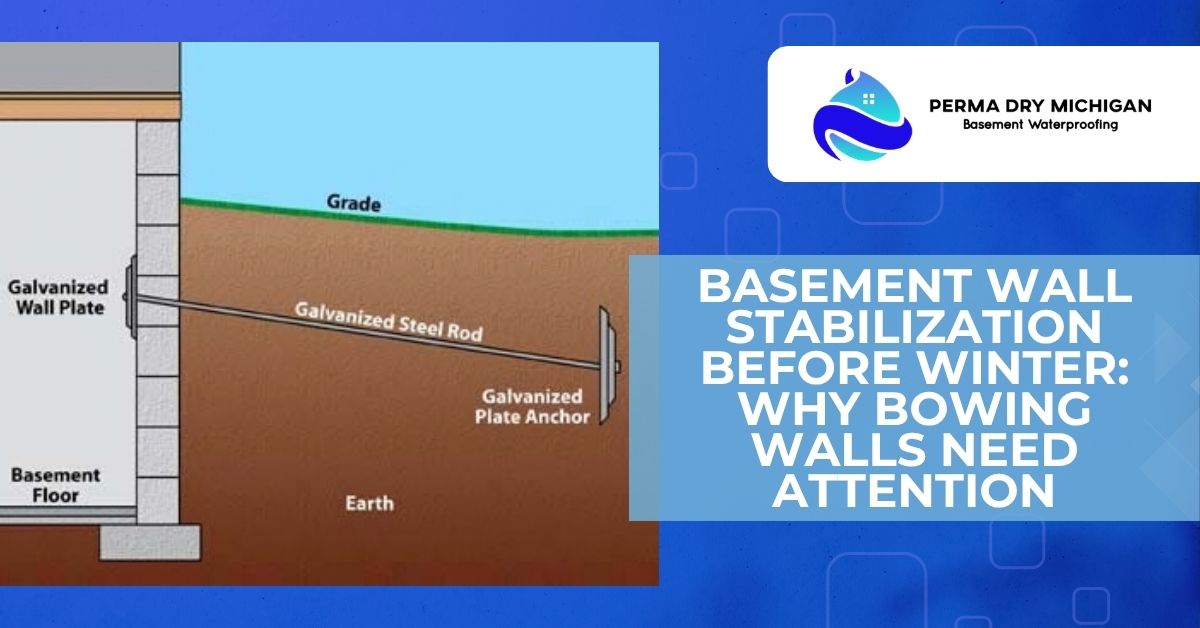
Steel wall anchors suit walls under sustained inward pressure. Our basement wall stabilization services transfer that load to stable soil beyond your foundation, stopping movement right away and often recovering some lost position over time.
When Carbon Fiber Reinforcement Fits
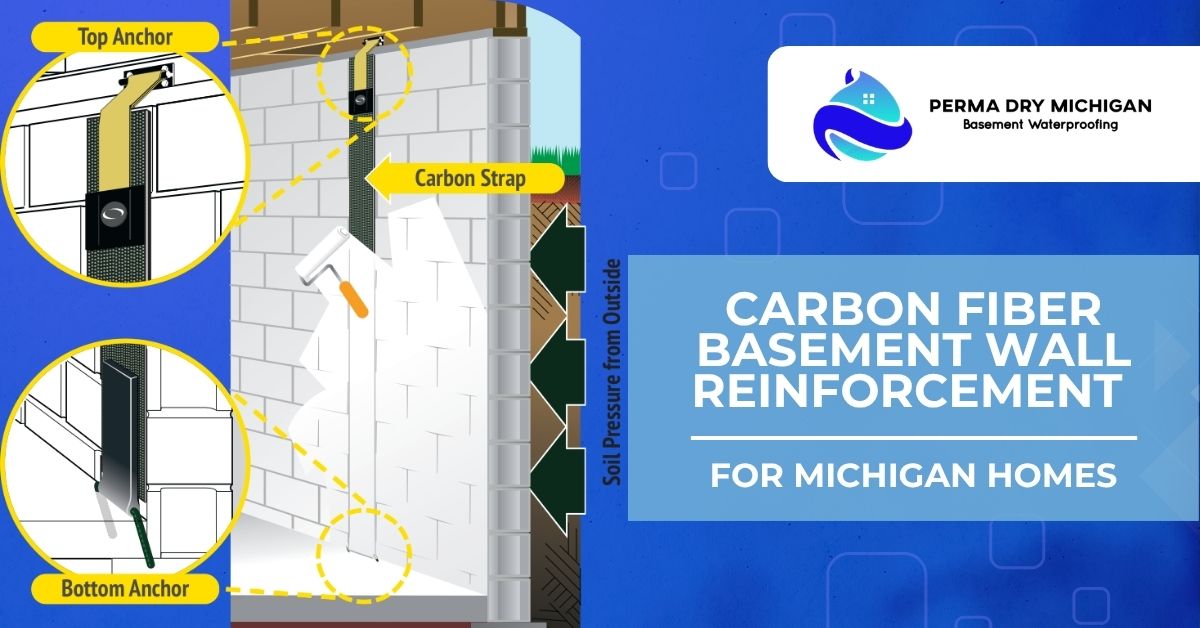
Carbon fiber reinforcement works well for walls with early to moderate bowing and limited space around the foundation. The straps bond to the wall and resist further deflection without excavation.
When Crack Repair or Drainage Leads the Need
A cracking wall with seepage often calls for foundation crack repair paired with moisture control. When water load drives the problem, correcting footing drainage and adding basement waterproofing relieves the pressure so your wall stops fighting a losing battle.
Unsure which path fits? That’s exactly what an inspection settles. Book a free wall inspection and we’ll show you the evidence, not a pitch.
What to Look for When Comparing Repair Advice
- Does the advice reflect local conditions? Southeast Michigan clay behaves differently from sandy soil elsewhere. Your plan should account for our ground and climate.
- Does it explain winter timing? Repair isn’t season-neutral here. Freeze-thaw urgency is real, and a credible contractor will say so.
- Does it match the fix to the symptom? Be wary of anyone who prescribes one product for every wall. A one-inch bow and a hairline crack call for different solutions.
- Does it address the root cause? Stabilizing a wall without managing hydrostatic pressure leaves the underlying threat in place. The strongest plans treat both structure and water.
Demand specifics. Vague, one-size answers usually signal a template, not an inspection.
Why Waiting Until Spring Costs More
A wall that leans a quarter inch today can shift further across a single winter, widening cracks, worsening basement seepage, and expanding the repair scope. What starts as a targeted stabilization job can grow into a larger foundation wall repair.
What to Do the Moment You Notice Movement | Contact Perma Dry Michigan
Take these steps as soon as you spot a bow or crack:
- Document the damage. Photograph the crack or bow and note the date.
- Measure the lean. Hold a level against the wall to gauge how far it tilts.
- Check for moisture. Look for staining, seepage, or efflorescence near the crack.
- Watch, but don’t wait through winter. Monitoring is fine. Ignoring is costly.
- Schedule a professional inspection. Ask whether stabilization alone solves it or whether drainage correction should support the repair.
Don’t gamble on another Michigan winter. Request your free estimate today and let our team assess your walls before the freeze deepens the pressure.
Frequently Asked Questions About Basement Wall Stabilization
Yes, when the wall is actively moving. Inward bowing signals sustained lateral soil pressure that worsens over time and can eventually threaten structural integrity. Schedule a professional inspection to confirm severity and the right repair.
It depends on the wall. Steel wall anchors suit walls under sustained pressure, while carbon fiber reinforcement fits early to moderate bowing. An on-site inspection determines which method delivers a lasting fix.
Waterproofing alone won’t straighten a bowing wall, but it addresses a root cause. Relieving hydrostatic pressure through drainage and waterproofing protects your stabilization investment and prevents recurring movement.
Wall stabilization addresses movement like bowing, leaning, or buckling. Crack repair seals cracks and stops seepage. Many walls need both, which is why an inspection is the reliable way to decide.
Disclaimer: This article offers general educational information about basement wall conditions and repair options. It isn’t a substitute for a professional on-site structural or waterproofing inspection. Every foundation varies by wall type, soil, drainage, and severity. Contact a qualified contractor to evaluate your situation, and treat any signs of rapid or severe movement as an immediate priority.