A wet basement threatens the structural integrity and value of your home. When you notice damp walls, pooling water, or mold growth, you need a definitive solution to protect your property. Property owners in Southeastern Michigan face a critical choice when securing their foundations. You must decide between interior drain systems vs. exterior waterproofing.
Understanding the technical differences between these two methods ensures you make a smart, cost-effective investment. This guide breaks down exactly how these systems work. You will learn why local climate factors matter and how to choose the right strategy for ultimate basement water damage prevention.
The Southeastern Michigan Climate Challenge
Homeowners in Plymouth, Canton, Detroit, Livonia, and Ypsilanti deal with unique environmental stressors. Southeastern Michigan features heavy clay soils that expand significantly when wet and contract during dry spells. This constant shifting exerts immense force on your foundation walls.
Furthermore, our region experiences harsh freeze-thaw cycles. Groundwater surrounding your basement freezes, expands, and pushes violently against the concrete. When the ice melts, water seeps through the newly formed cracks. Managing this relentless cycle requires robust basement waterproofing solutions designed specifically for Michigan weather.
Understanding Exterior Waterproofing Methods
Exterior waterproofing methods aim to stop water before it touches your foundation walls. Contractors achieve this by excavating the earth around the entire perimeter of your home. They dig down to the foundation footing using heavy backhoes and trenching equipment.
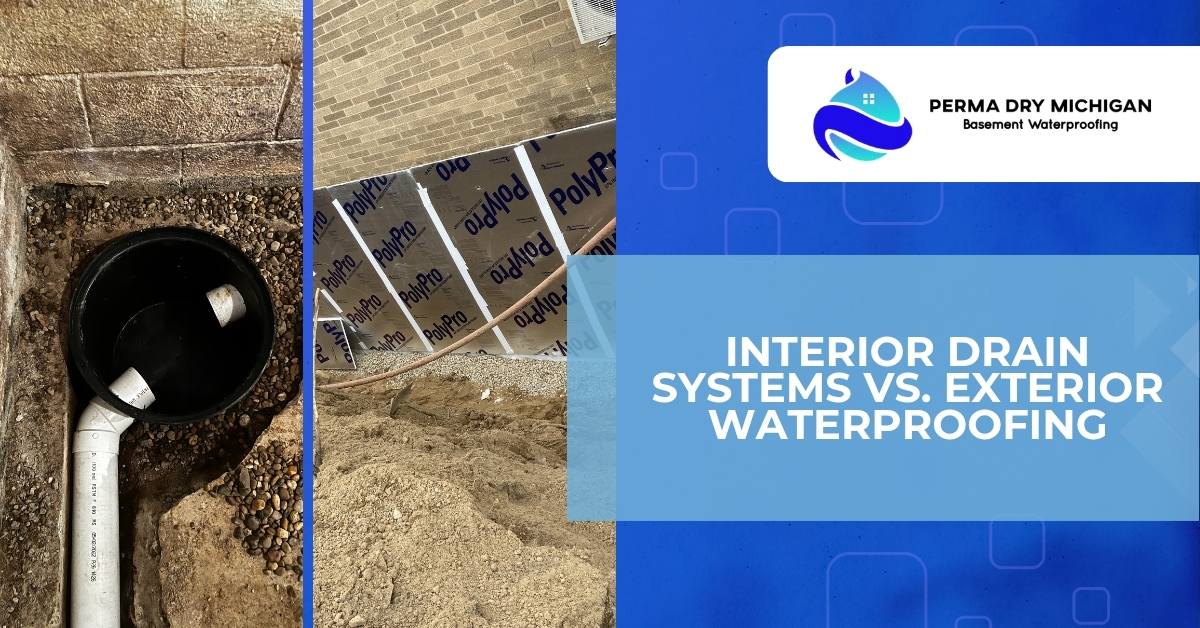
Once contractors expose the wall, they apply a waterproof barrier or tar sealant. They then install an exterior drain tile at the bottom of the trench and backfill the area with gravel and soil.
While this sounds effective in theory, exterior excavation presents severe drawbacks for property owners. The process is highly disruptive. It requires dismantling porches, uprooting mature landscaping, and breaking apart concrete walkways. The soil placed back against the home remains loose and porous for years, absorbing even more water than the undisturbed earth around it. Over time, external elements like tree roots and shifting soil degrade the waterproof membrane. This leads to hidden breaches that allow water to enter your basement unnoticed.
The Technical Superiority Of Interior Drainage Systems
Interior drainage systems offer a smarter, more targeted approach to groundwater management. Instead of fighting a losing battle against external soil conditions, interior systems capture water at the exact point of entry.
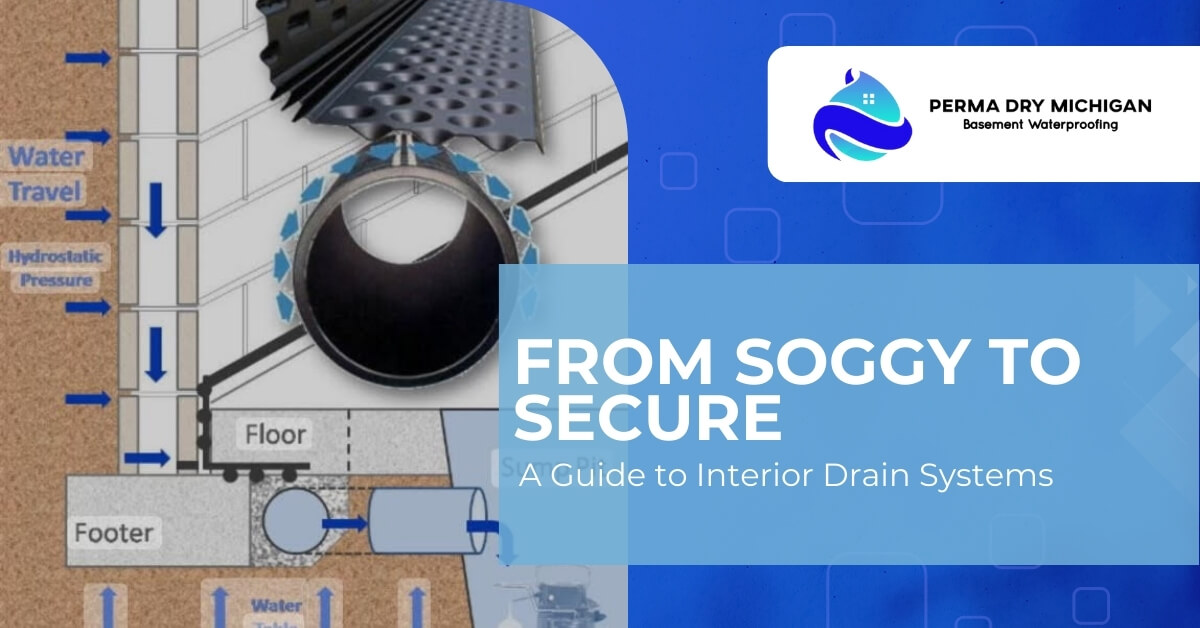
Contractors install interior drainage systems by carefully removing a small perimeter of your concrete basement floor. They dig a shallow trench down to the footing and lay a specialized drain tile surrounded by clean, crushed stone. This system actively collects water seeping through the walls and up from the floor.
The core advantage of an interior system lies in hydrostatic pressure relief. Hydrostatic pressure is the immense upward and inward force that resting groundwater exerts on your foundation. When the water table rises beneath your home, this pressure forces moisture through the microscopic pores of your concrete. An interior drain tile effectively relieves this pressure by giving the water a path of least resistance. It channels the groundwater safely away before it breaches your living space.
Interior Drain Systems vs. Exterior Waterproofing: A Direct Comparison
When comparing these two approaches, interior systems consistently outshine exterior excavation across several key metrics.
Cost Of Basement Waterproofing
The cost of basement waterproofing represents a major concern for homeowners. Exterior waterproofing requires heavy machinery, extensive labor hours, and property restoration costs. This makes it an incredibly expensive undertaking. In contrast, interior drainage systems bypass the need for massive earthmoving. They typically cost about half the price of exterior methods. Perma Dry Michigan provides honest, transparent pricing for these installations, ensuring you receive maximum value without high-pressure upselling.
Installation Time And Property Disruption
Exterior excavation turns your yard into a construction zone for weeks. It destroys gardens and disrupts your daily life. Interior installations take place entirely inside the basement. Certified technicians complete the job efficiently, often within a day or two. Your exterior landscaping remains completely untouched.
Long-Term Reliability And Maintenance
Exterior pipes buried deep underground are nearly impossible to service. If tree roots infiltrate the exterior drain tile, or if mud clogs the system, contractors must excavate your yard all over again. Interior systems remain highly accessible. They feature built-in service ports that allow technicians to flush and inspect the lines easily. This accessibility guarantees decades of reliable performance.
Integrating Comprehensive Services For Total Protection
Effective water management often requires a multi-layered approach. An interior drain tile needs a destination for the collected water. This is where professional sump pump installation comes into play. A high-capacity sump pump efficiently evacuates the gathered groundwater safely away from your foundation.
If hydrostatic pressure has already caused structural damage, you may require foundation crack repair. Grid stitch technology and high-pressure injections restore the strength of your basement walls. Additionally, homes built on a crawl space benefit from dedicated crawl space waterproofing and encapsulation. These combined local basement waterproofing services create an impenetrable defense against moisture, mold, and structural decay.
Secure Your Property With Perma Dry Michigan
Do not let groundwater dictate the safety and value of your home. Understanding the distinct advantages of interior drain systems vs. exterior waterproofing empowers you to make the right choice for your property. Interior systems deliver superior hydrostatic pressure relief, cost-effective installation, and permanent reliability.
Perma Dry Michigan stands as your trusted local, family-owned expert in foundation repair. We understand the specific climate challenges of Southeastern Michigan. Our certified technicians deliver efficient, long-lasting solutions backed by a lifetime warranty. We prioritize transparent pricing and exceptional workmanship on every project.
Frequently Asked Questions About Interior Drain Systems vs. Exterior Waterproofing
Installing a certified interior drainage system paired with a heavy-duty sump pump provides the most reliable hydrostatic pressure relief. This combination actively removes water and relieves stress on your foundation walls.
Yes. Perma Dry Michigan provides fully transferable lifetime warranties on our waterproofing solutions. We stand by our proven expertise to give you permanent peace of mind.
Absolutely. A dry, secure basement increases usable square footage, prevents expensive structural failures, and makes your home highly attractive to future buyers.
No. We pride ourselves on honest business practices. We recommend only the precise, guaranteed services your property requires. For the vast majority of Southeastern Michigan homes, interior drainage provides superior protection at a fraction of the cost.
Michigan’s heavy clay soils and freeze-thaw cycles create unique challenges for basements. Expanding and contracting soil puts pressure on foundation walls, while melting snow and rain increase groundwater levels. Interior drain systems are specifically designed to handle these conditions by relieving hydrostatic pressure and preventing water intrusion.
Installing an interior drain system involves carefully removing a small perimeter of your basement floor to create a trench for the drainage system. Once installed, the floor is restored with concrete, leaving no visible damage. The process is minimally invasive and ensures long-term protection for your home.
Interior drain systems are designed to be low-maintenance. Routine inspections every 1-2 years are recommended to ensure the system remains clear of debris. Perma Dry Michigan installs systems with built-in service ports, making maintenance quick and hassle-free.
If your basement floods, start by removing any standing water using a wet/dry vacuum or sump pump. Move furniture and valuables to a dry area and use fans or dehumidifiers to reduce moisture. Contact Perma Dry Michigan immediately for a professional assessment and long-term waterproofing solution.
Yes, Perma Dry Michigan offers flexible financing options to make basement waterproofing accessible for all homeowners. Our team will work with you to create a payment plan that fits your budget, ensuring you can protect your home without financial stress.
Absolutely. Interior drain systems are designed to manage significant water volumes, especially when paired with a high-capacity sump pump. They effectively channel water away from your foundation, even during heavy rainfall or rapid snowmelt.
Perma Dry Michigan is a family-owned, locally operated business with deep roots in Southeastern Michigan. We prioritize transparent pricing, honest recommendations, and proven solutions tailored to the unique challenges of our region. Our fully transferable lifetime warranties ensure your investment is protected for years to come.